Getting there
Reaching Quebra Costas on foot
How the street to the Old Cathedral runs, what the Almedina arch is and what to expect underfoot on the way up from the lower town.
Book the concert ↗Quick answer
Walk to the Almedina arch in the lower town and climb Rua Quebra Costas. The city's own inventory says the street is bounded by the arch and by the square in front of the Old Cathedral, and calls it the shortest route between the lower town and the cathedral. Fado ao Centro stands at number 7. The upper end is a staircase, so wear shoes with grip.
The short answer
Head for the Almedina arch and go up. Rua Quebra Costas starts at the arch and ends at the Largo da Sé Velha, the square in front of the Old Cathedral, according to the Câmara Municipal de Coimbra's inventory sheet for the street, which calls it the shortest way between the Baixa, the lower town, and the cathedral. Fado ao Centro is at number 7. You do not need a map beyond those two landmarks: the arch at the bottom, the cathedral at the top.
The Almedina arch
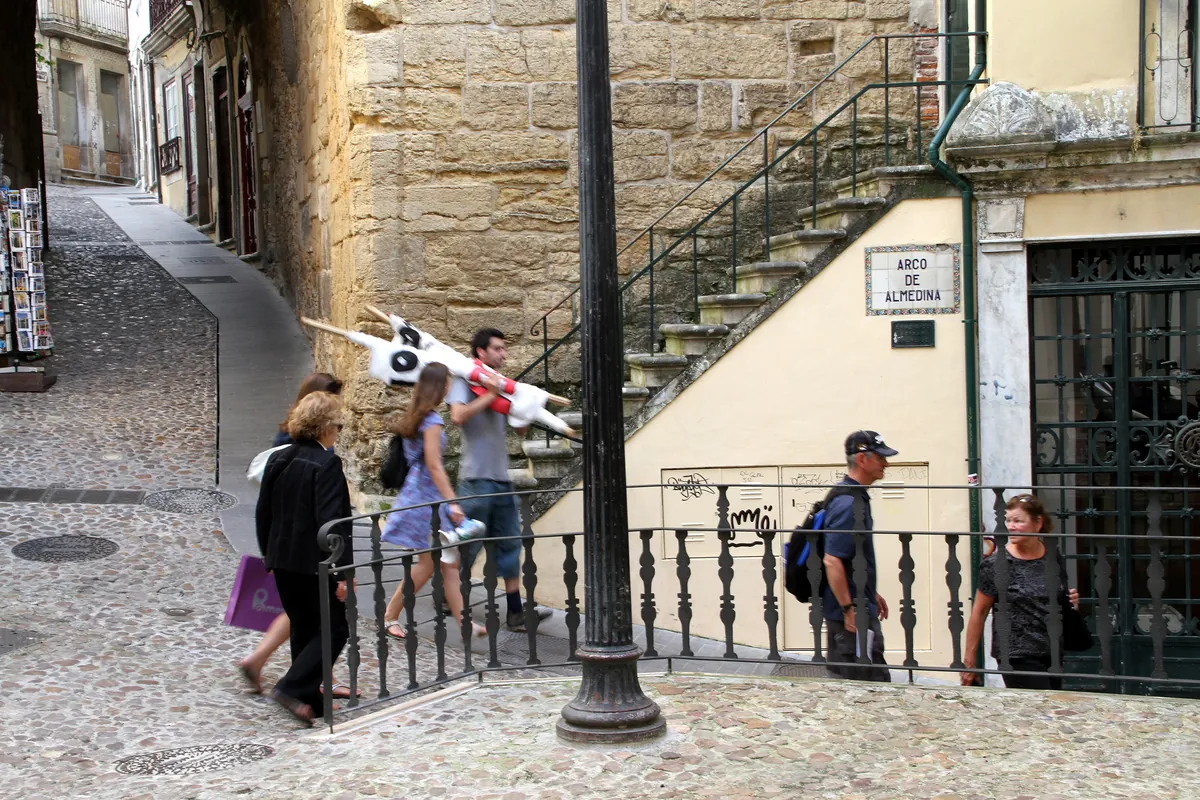
The city's Walled Coimbra leaflet describes the Almedina tower and arch as the main gate of the walls of Coimbra, with foundations that date back to the time of Islamic occupation. It says the gate was renovated over the centuries, particularly in the sixteenth century, when the top was added for use as the aldermen's house, and that the tower today holds the Walled City Interpretative Centre. Wikipedia says Coimbra's medieval wall survives in remnants, among them the Almedina Gate.
Neighbours of the arch
The same leaflet points out two more pieces of the old defences close by. The Barbican arch, built in the Manueline period of the sixteenth century, is a pointed arch that was the entrance to a second defensive enclosure reinforcing the city wall, and carries a sculpture of the Virgin with the Child above the Portuguese royal shield. Casa de Sub-Ripas, an old defensive tower of the wall, was adapted as a residence in the sixteenth century. Both belong to the stretch of old town you pass on the way to the street.
The street
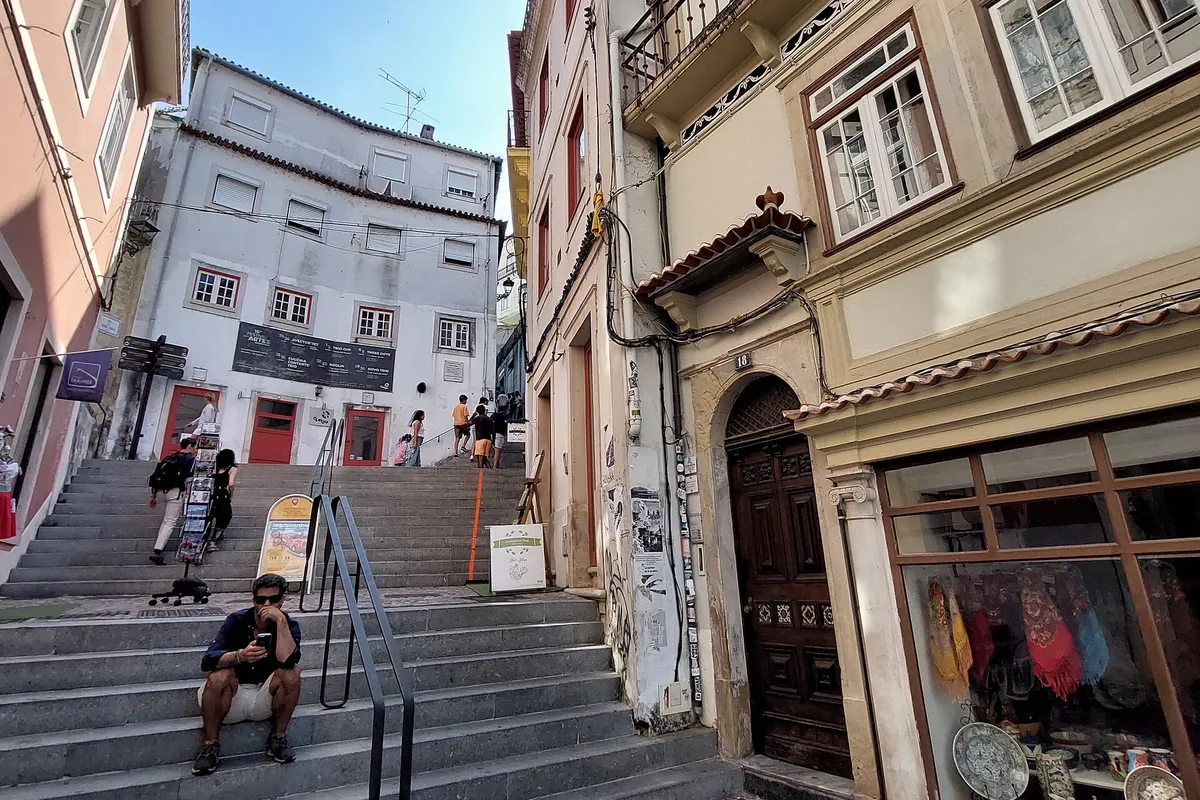
The inventory sheet ties the street's name to its winding course, and notes that the top of the street has been turned into a staircase, mainly from the eighteenth century on. The words themselves mean breaking backs in Portuguese, and travel writers often read the name as a nod to the climb, though that reading is not in the municipal text. What the photographs on this page show is stone steps, cobbles and tall house fronts, a street that climbs in stages and not in one straight line.
The upper city and the lower city
Wikipedia says Coimbra was divided in the Middle Ages into an upper city, where the aristocracy and clergy lived, and a lower city by the Mondego River, where merchants and artisans worked, and that the city sits on a hill beside the river. Rua Quebra Costas is the link between the two. Walking it from the arch is a short version of that old division: you leave the lower town's level ground and arrive at the cathedral on the slope above.
At the top: the Old Cathedral
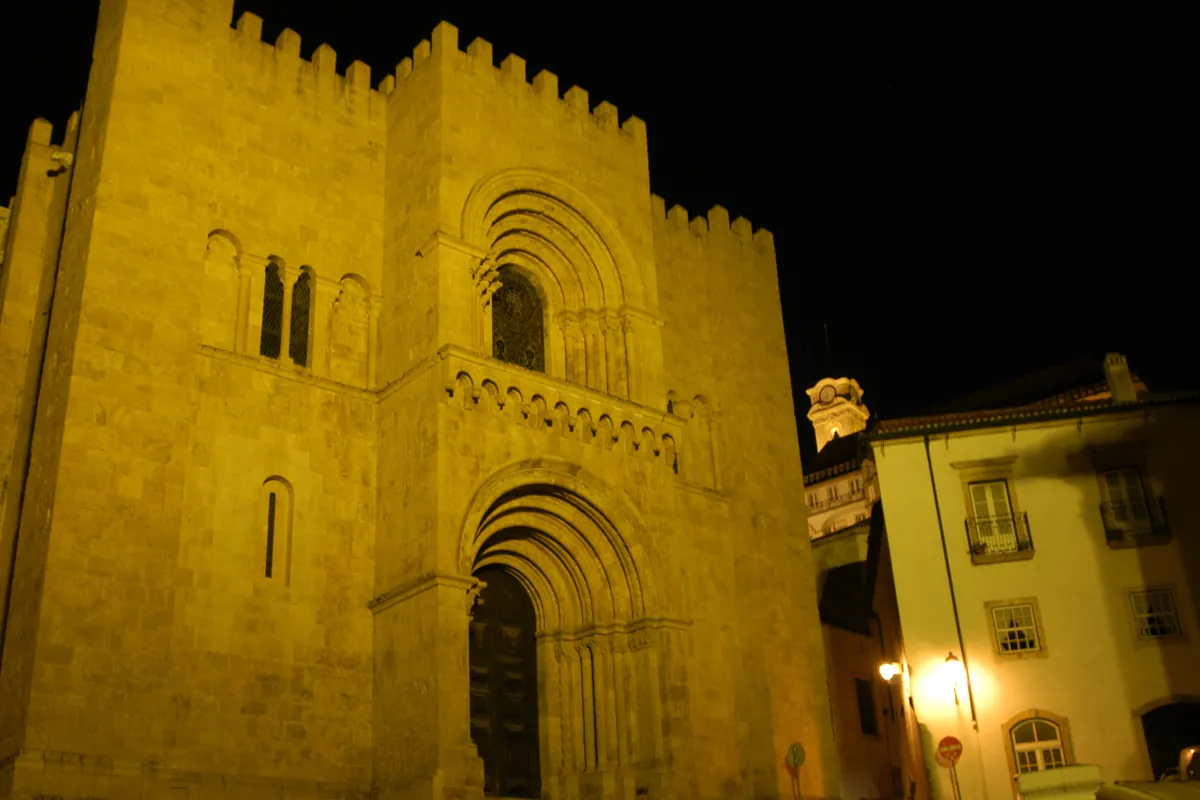
Wikipedia describes the Old Cathedral as a Romanesque building whose construction began some time after the Battle of Ourique in 1139. From the outside it looks like a small fortress, with high crenellated walls and few narrow windows, which Wikipedia explains by the belligerent times in which it was built. It says this is the only one of the Portuguese Romanesque cathedrals from the Reconquista to have survived relatively intact. It was built on the slope of a hill, and the square in front of it is where Rua Quebra Costas ends.
Stairs, shoes and bags
Expect steps and uneven paving. Shoes with a grip suit the climb better than smooth soles, and a small bag suits it better than a large one. The street's upper end is a staircase, so the way to the door may include steps. If that matters to anyone in your party, put the question to GetYourGuide's support before booking, and leave anything bulky at your hotel.
Who this isn't for
Anyone who cannot manage stairs, or who travels with a pushchair or a wheelchair, should ask GetYourGuide's support about the route to the door before booking. Anyone arriving with heavy luggage should leave it at their hotel, since the climb is the one part of the evening that asks something of you. And anyone who wants a flat route to the door should ask GetYourGuide's support before booking, because this guide describes the street as the city's own inventory does, not the door itself.
Frequently asked questions
Where does Rua Quebra Costas start and end?
It starts at the Almedina arch and ends at the Largo da Sé Velha, the square in front of the Old Cathedral, according to the city's inventory sheet for the street.
Is there a staircase?
Yes. The inventory says the top of the street has been turned into a staircase, mainly from the eighteenth century on.
What does Quebra Costas mean?
Literally, breaks backs in Portuguese. The city's inventory links the name to the street's winding course.
What is the Almedina arch?
The main gate of the walls of Coimbra, with foundations from the time of Islamic occupation, says the city's Walled Coimbra leaflet.
Sources